

The Assumption of Mary by Titian
The Assumption of Mary by Titian
The Assumption of Mary by Titian
Audio transcription
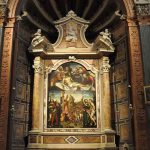
Wonderful altarpieces decorate the various chapels of the cathedral, but the most famous work is to be found in the first altar of the left nave. At the centre of the Cartolari-Nichesola Chapel is Titian’s altarpiece of the Assumption. The chapel was built in the second half of the fifteenth century at the behest of Canon Bartolomeo Cartolari.
It was dedicated to Saints Stephen and Lawrence, whose figures can be seen still carved on the marble pilasters.
The chapel later became the property of the Nichesola family, who commissioned Jacopo Sansovino to rebuild it. In 1530, the sculptor created the tomb of Bishop Galesio Nichesola on the left side and acted as an intermediary for the purchase of Titian’s altarpiece of the Assumption.
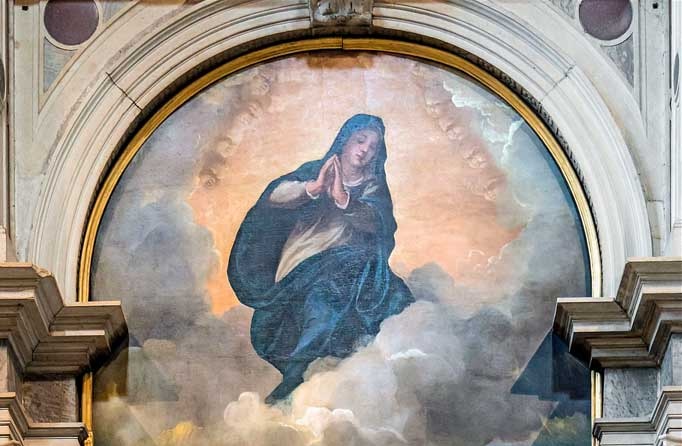
After the painting was stolen during the Napoleonic campaigns of 1797, it was eventually returned to Italy. The subject of the work is inspired by the story of the Assumption of the Virgin. Mary is depicted ascending into heaven, seated on a cloud like a throne, bidding farewell to the apostles: some are distressed by her sudden death, while others are amazed and incredulous at the miracle of the Assumption and still search for her body in the empty tomb. She comforts them with a pitiful and sweet look, leaving them a belt as a token, which the apostle Thomas in the centre of the painting picks up. The work can be dated to between 1527 and 1530.